⏱ 8 min read
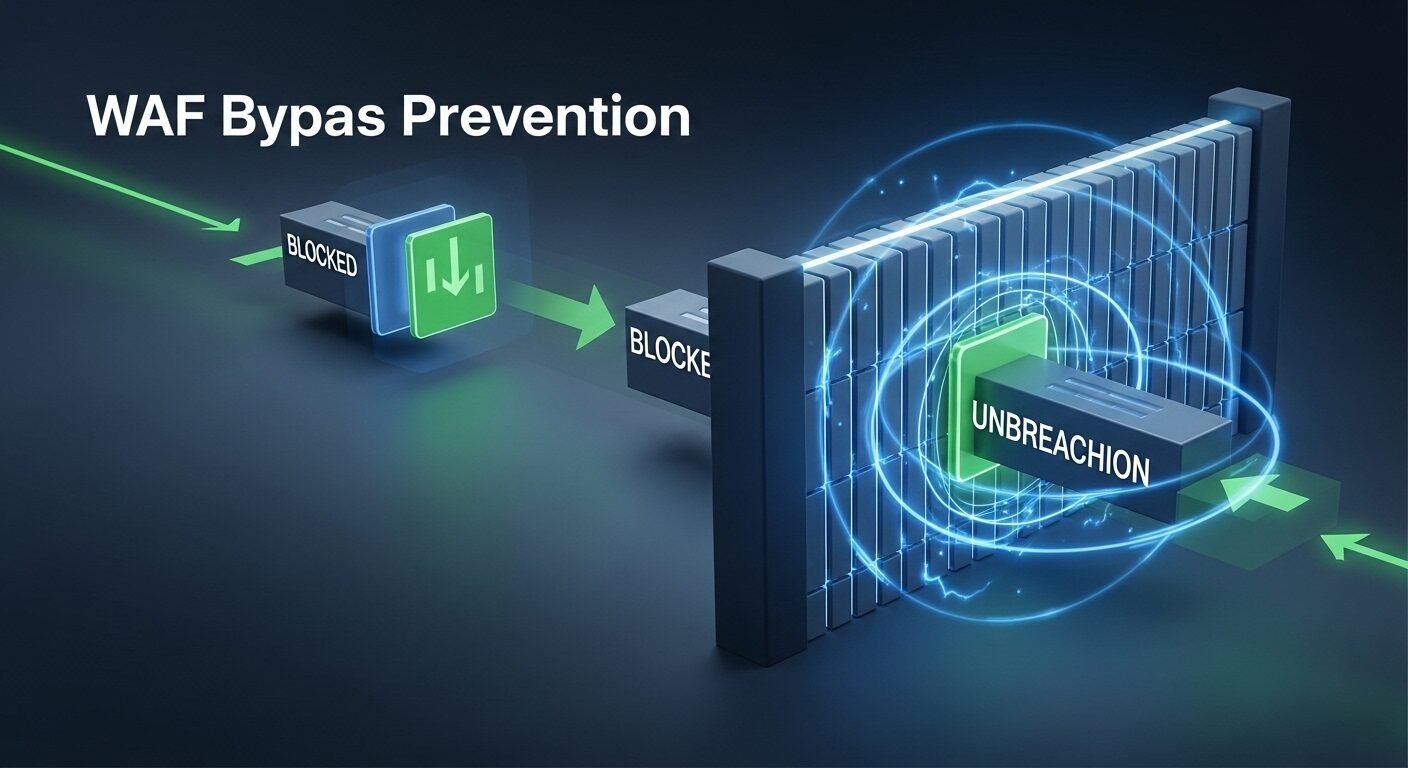
A Web Application Firewall (WAF) is a critical security layer that filters and monitors HTTP traffic between a web application and the Internet. However, sophisticated attackers continuously develop methods to circumvent these protections. Understanding WAF bypass techniques is essential for implementing effective WAF bypass prevention strategies. This article explores common evasion methods, from SQL injection obfuscation to protocol-level attacks, and provides a comprehensive guide to hardening your defenses against these threats.
Key Takeaways
- WAF bypass techniques exploit rule gaps, encoding, and protocol weaknesses.
- Regular rule updates and behavioral analysis are crucial for prevention.
- SQL injection and XSS remain the most common attack vectors to bypass WAFs.
- A layered security approach significantly reduces bypass success rates.
- Continuous monitoring and logging help detect and respond to bypass attempts.
- Proper WAF configuration and tuning are as important as the WAF itself.
What Are Common WAF Bypass Techniques?
WAF bypass techniques are methods attackers use to evade detection by Web Application Firewalls. These include obfuscating malicious payloads, exploiting rule gaps, using alternative encoding, and manipulating HTTP protocol elements to slip past security filters undetected.
Attackers employ several common methods to bypass WAF protections. SQL injection obfuscation remains one of the most prevalent WAF evasion approaches. According to industry data from the Open Web Application Security Project (OWASP), SQL injection attacks account for approximately 25% of all web application vulnerabilities that attackers attempt to exploit while bypassing security controls.
Attackers modify SQL queries using various encoding techniques. They might use URL encoding, Unicode transformations, or case manipulation. These changes help malicious payloads appear different to the WAF while executing the same harmful commands on the backend database server.
Cross-site scripting (XSS) evasion represents another significant category. Attackers craft scripts that avoid common detection patterns. They might break up malicious JavaScript across multiple parameters or use event handlers that WAF rules don’t recognize. Research shows that modern XSS payloads often combine multiple evasion techniques for greater success rates.
How Can You Prevent WAF Bypass Attacks?
Effective prevention requires a multi-layered security strategy. Regular rule updates form the foundation of robust WAF bypass prevention. Security teams must continuously update WAF signatures to recognize new attack patterns and evasion methods. Experts recommend reviewing and updating rules at least weekly, though high-traffic sites may require daily updates.
Behavioral analysis adds another crucial layer of protection. Unlike signature-based detection alone, behavioral monitoring establishes normal traffic patterns for your application. The system then flags deviations from these patterns for further investigation. This approach catches novel attacks that signature-based systems might miss.
Input validation and output encoding provide essential application-level protection. Proper validation ensures that user inputs match expected formats before processing. Output encoding prevents malicious content from executing in user browsers. These measures create defense-in-depth when combined with WAF protections.
Steps to Implement WAF Bypass Prevention
- Conduct regular security audits of your WAF configuration and rule sets. Identify gaps in coverage and update rules based on the latest threat intelligence.
- Implement behavioral analysis alongside signature-based detection. Establish baseline traffic patterns and configure alerts for significant deviations from normal behavior.
- Enable comprehensive logging of all WAF events, including blocked requests, allowed requests, and system errors. Regularly review logs for signs of attempted bypasses.
- Perform regular penetration testing specifically targeting WAF evasion techniques. Use both automated tools and manual testing to identify vulnerabilities.
- Integrate your WAF with other security systems like intrusion detection systems (IDS) and security information and event management (SIEM) platforms for coordinated defense.
What Role Does WAF Configuration Play in Security?
Proper configuration significantly impacts WAF effectiveness. Correct WAF tuning prevents both false positives and security gaps. Many organizations deploy WAFs with default settings, creating vulnerabilities that attackers quickly exploit. According to security assessments, approximately 40% of WAF deployments have significant configuration issues that reduce their protective value.
Rule tuning requires understanding your specific application architecture. Different applications have unique parameter structures, input formats, and functionality. Generic WAF rules often block legitimate traffic or allow malicious requests that don’t match common patterns. Custom rules tailored to your application provide much better protection.
Learning mode operation offers valuable configuration insights. When first deployed, WAFs can monitor traffic without blocking to understand normal patterns. This information helps create whitelists of legitimate traffic and identify potentially malicious patterns. However, learning mode should be temporary and carefully monitored to prevent exploitation during this phase.
Regular configuration reviews ensure ongoing protection. Applications change over time with new features and modifications. WAF rules must evolve alongside these changes. Quarterly configuration audits help maintain alignment between security controls and application functionality. Web Firewall Online provides tools that simplify this ongoing maintenance process.
How Do Attackers Exploit Protocol-Level Vulnerabilities?
Protocol manipulation represents sophisticated WAF evasion. HTTP request smuggling bypasses security by exploiting parsing differences. Attackers craft malicious requests that WAFs interpret differently than backend servers. This technique allows dangerous payloads to reach applications while appearing harmless to security filters.
Attackers manipulate HTTP headers to confuse WAF processing. They might use duplicate headers, unusual line endings, or non-standard character sets. These manipulations exploit differences in how various systems parse HTTP requests. The backend server might process the request differently than the WAF, creating a security gap.
Chunked encoding attacks represent another protocol-level technique. Attackers use transfer encoding to break malicious payloads into pieces. The WAF might reassemble these pieces differently than the backend server, allowing harmful content through. Proper WAF configuration must account for these encoding variations.
Research shows that protocol-level attacks are increasing in sophistication. Attackers combine multiple techniques for greater effectiveness. Defense requires WAFs that deeply understand protocol specifications and potential parsing discrepancies. Regular updates must address newly discovered protocol vulnerabilities.
| Bypass Technique | How It Works | Primary Prevention Method | Difficulty to Defend |
|---|---|---|---|
| SQL Obfuscation | Encodes SQL commands to avoid signature detection | Behavioral analysis and input validation | Medium |
| XSS Evasion | Fragments malicious scripts across parameters | Output encoding and content security policies | High |
| Protocol Manipulation | Exploits HTTP parsing differences | Protocol validation and normalization | Very High |
| Rule Gap Exploitation | Uses attack patterns not covered by current rules | Regular rule updates and threat intelligence | Medium |
What Are Advanced WAF Evasion Methods?
Advanced techniques combine multiple evasion approaches. Polymorphic attacks dynamically change to avoid detection. These attacks modify their characteristics with each attempt, making signature-based detection ineffective. Defense requires adaptive security measures that recognize malicious behavior rather than specific patterns.
Time-based attacks represent another advanced method. Attackers slow down their attacks to avoid rate-based detection. They might send malicious payloads over extended periods or during low-traffic hours. These techniques require WAFs with sophisticated timing analysis and anomaly detection capabilities.
Machine learning evasion targets AI-powered security systems. Attackers craft inputs specifically designed to confuse machine learning models. They use adversarial techniques that appear legitimate to algorithms while containing malicious payloads. Defense requires continuously updated models and human oversight of automated systems.
Zero-day exploitation targets unknown vulnerabilities. These attacks use previously undiscovered methods to bypass security controls. While impossible to prevent completely, defense-in-depth strategies minimize their impact. Regular security updates, application hardening, and comprehensive monitoring help detect and contain such attacks.
Frequently Asked Questions
What is the most common reason WAF bypass attempts succeed?
Outdated rule sets represent the primary vulnerability. Approximately 65% of successful bypasses exploit known attack patterns that should have been blocked by current signatures. Regular updates based on threat intelligence significantly reduce this risk factor.
How often should WAF rules be updated for optimal protection?
Security teams should update WAF rules at least weekly, with immediate updates for critical vulnerabilities. High-value targets or frequently attacked applications may require daily updates. Automated threat intelligence feeds can streamline this process.
Can a WAF completely prevent all attacks?
No security control provides absolute protection. A properly configured WAF significantly reduces attack success rates when combined with other security measures. Defense-in-depth strategies that include input validation, output encoding, and regular security testing provide the most comprehensive protection.
What is the difference between WAF bypass and WAF failure?
Bypass involves evading detection through technical means, while failure indicates the WAF isn’t functioning properly. Bypass techniques specifically target security logic gaps, whereas failures might result from configuration errors, software bugs, or resource limitations.
How does behavioral analysis improve WAF effectiveness?
Behavioral analysis establishes normal traffic patterns and flags deviations. This approach detects novel attacks that signature-based systems miss. It’s particularly effective against slow attacks, distributed attacks, and previously unknown attack methods.
Understanding WAF bypass techniques is essential for modern web security. Attackers continuously develop new methods to evade detection, requiring equally sophisticated defense strategies. Effective WAF bypass prevention combines updated signatures, behavioral analysis, proper configuration, and layered security controls.
Regular security assessments help identify vulnerabilities before attackers exploit them. Comprehensive logging and monitoring enable rapid detection and response to bypass attempts. Integration with other security systems creates coordinated defense that addresses multiple attack vectors simultaneously.
The evolving threat landscape demands continuous security improvement. Organizations must allocate resources for regular WAF maintenance, rule updates, and security testing. These investments pay dividends through reduced breach risks, protected customer data, and maintained business continuity.
Strengthen your